What do the flags in F1 mean?
- supermahika
- May 29, 2022
- 2 min read
Green:
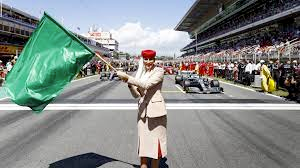
Normal racing. This is always shown following a yellow flag to indicate that the hazard has been passed. A green flag is also shown at the start of the race/quali/practice.
Yellow:

Single waved yellow flag means overtaking is prohibited due to danger OFF the track. A speed reduction is required.
Double waved yellow flag means overtaking is prohibited due to danger ON the track. A speed reduction is required.
this image has two yellow flags
SC board:

Safety Car is put out on track when an incident blocks the track or leaves a lot of debris. Drivers stay behind the SC until the marshals have cleared up. Virtual Safety Car is for more minor incidents, where no safety car is on track, but drivers must slow down. This board is always accompanied by a single waving yellow flag.
Yellow and Red Striped:

Slippery track, due to oil, water or loose debris. If it is rocked that indicates a small animal on track.
Blue:

A blue flag indicates that the driver in front who is one or more laps down must let faster cars behind pass. If the driver ignores 3 consecutive blue flags, a penalty is issued to the driver.
White:

Slow moving vehicle ahead. Also used when a different vehicle, such as an ambulance, is on track.
Red:
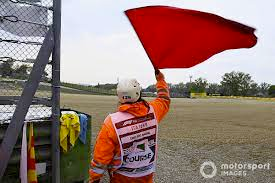
Session suspended or stopped, all cars go to the pits.
Black:

Driver is disqualified and must return to pits immediately. This flag also have the driver's race number to help indicate who it is referring too.
Black with orange circle:

Car is damaged or driver has a mechanical problem and must return to pits as soon as possible. This flag is accompanied by the driver's race number.
Half black/Half white:

Warns a driver for unsportsmanlike behavior.
Checkered flag:
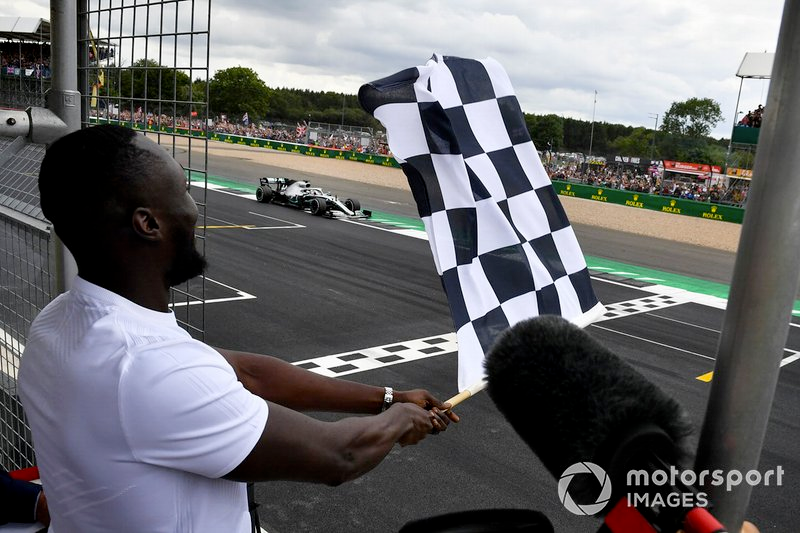
Session is completed. Some drivers may just be starting a lap and are allowed to finish the lap.


Comments